A real-time data architecture should not require separate systems for transactions, analytics and lakehouse storage, with pipelines moving and reconciling data among them. Yet that is how many data stacks are built: an operational database records each event, a warehouse supports analysis, and object storage holds larger historical datasets. Every copy introduces delay, additional infrastructure and another opportunity for the systems to disagree.
SingleStore takes a different approach. One distributed database handles transactional and analytical data processing while connecting operational data to the lakehouse, so new information can be queried as soon as it is written. Applications, dashboards and AI systems work from current data rather than waiting for ETL jobs to copy it between data sources. The result is not simply a cleaner architecture. It removes the synchronization gap between what has happened in the business and what its systems can see.
How fragmented data systems undermine real-time analytics
The cost appears in the gaps between systems:
- Dashboards lag behind the business because an overnight batch job failed.
- Models train on stale datasets because recent records have not reached the warehouse.
- Security reviews stall because the same data exists under different controls in several systems.
- A customer event arrives too late to inform a recommendation, detect fraud or trigger an operational response.
Each additional copy introduces latency, complicates governance and makes data quality harder to verify. The organization may possess the information it needs, but its applications and analysts cannot use it at the moment it matters.
A simpler, unified approach to data
A better approach is to design systems that work together from the outset, rather than stitching them together over time.
Instead of managing separate tools and duplicated datasets, this model uses one database engine for transactions, analytics and the data processing required by operational applications. Structured data, semi-structured records and unstructured data remain available to every workload through a common security, storage and access model. The result is a simpler architecture that removes the need for constant coordination between disconnected components.
In this setup, there are no ETL pipelines to maintain, no synchronization delays, and no gaps between when data is created and when it becomes useful. Information flows continuously across the platform, remaining current and accessible wherever it is needed.
This is not a theoretical concept. It is already in use in production environments, where it changes how systems behave day to day. A new record becomes immediately available to operational software, analytical dashboards and AI applications, without first being copied through a warehouse or secondary data store. Frequently accessed data is buffered into cloud storage automatically, without requiring background jobs or manual intervention. A single database engine handles both low-latency queries and large-scale analytical scans, supported by a storage layer that enforces schema for consistency and reliability. Access controls and audit logging are applied uniformly, regardless of whether the data resides in memory, on disk, or in the cloud.
Because these capabilities are built into the platform itself, everything works together as a cohesive system, eliminating the need for custom glue code and reducing operational complexity.
Real-time data analysis on current data
The era of waiting on data pipelines and nightly jobs is over. Your team can now act the instant something happens. When every event is immediately available for analysis, applications and analysts can respond to current conditions instead of working from the last completed pipeline run.
When all your data lives in one place and one engine powers every workload:
Fraud detection algorithms can evaluate each event against the full context of recent activity rather than relying on incomplete datasets or delayed enrichment.
- Personalization logic reflects a customer’s last click, not yesterday’s behavior, by analyzing user and customer behavior in real time to deliver more relevant recommendations.
Reports update instantly, without anyone waiting on a pipeline run. Real-time data analysis and analytic workloads, including SQL queries, help teams uncover insights and enforce data quality.
Machine learning teams and analysts work off the same fresh dataset, with no version mismatches, so users benefit from consistent, high-quality data for their analytic tasks.
In this model, real-time is less about speed in isolation and more about consistency. The same data is available everywhere, at the same moment, so decisions are both immediate and well-informed.
Real-time data for artificial intelligence and generative AI
Artificial intelligence is only as current as the data available to it. A generative AI application working from a warehouse refreshed every few hours cannot reliably answer questions about inventory, customer activity, fraud or equipment conditions as they exist now. Giving AI applications direct access to live operational data removes that delay and allows each model to use recent events alongside historical context.
These workloads also require more than conventional SQL analysis. Applications may need to combine structured data such as transactions and customer records with unstructured data from documents, messages or logs. Supporting SQL queries, vector search and full-text search in the same engine lets algorithms retrieve relevant information across these data sources without maintaining separate copies for each method of analysis.
The business benefits
This is less about a new architecture and more about reducing the friction that slows teams down today. When systems are unified, the benefits show up in everyday work:
- Speed. Transactions and analytics happen in the same moment, on the same data.
- Simplicity. Fewer systems to manage, fewer pipelines to maintain.
- Savings. Lower storage, lower licensing, less operational drag and the low cost of storage and infrastructure.
- Clarity. A single governance model gives you confidence in your compliance.
Because transactions, analytics and AI applications use the same current data, teams spend less time reconciling copies and more time turning data into useful insight.
One platform for transactions, analytics and AI
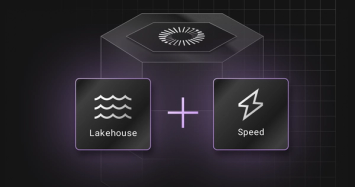
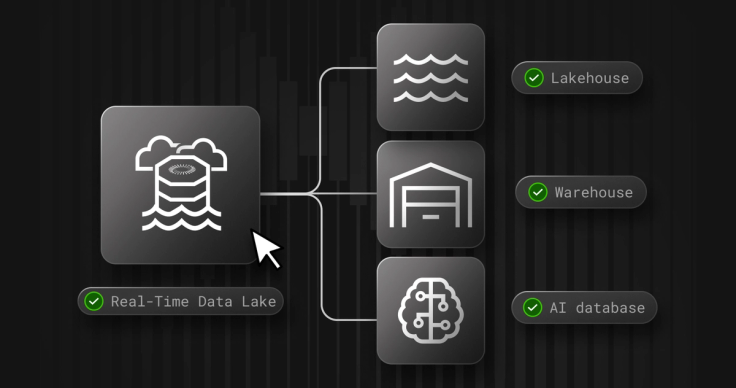
SingleStore isn’t just a unified transactional-analytical engine. It’s a full-blown AI database, too. OLTP, analytics and lakehouse use cases all run in a single platform. We support data lakehouses, data warehouses and AI databases, enabling diverse workloads and big data analytics across structured, semi structured and unstructured data.
Inline ingestion makes every write immediately queryable, while smart buffering moves data seamlessly between memory and cloud storage. The system design supports storing data of different types, ensuring flexibility for a wide range of data types and data structures.
One engine, one metadata layer and one security model span every workload. For example, organizations use SingleStore to power real-time analytics on eCommerce transactions, process images for AI-driven medical diagnostics and manage diverse analytic workloads across multiple data types. These examples highlight the flexibility and power of its data structures for modern data management needs.
Stop duct-taping systems together. Start building on a platform that outperforms.
Frequently Asked Questions