
Agentic AI Readiness: Closing the Context Gap at Enterprise Scale
eBook
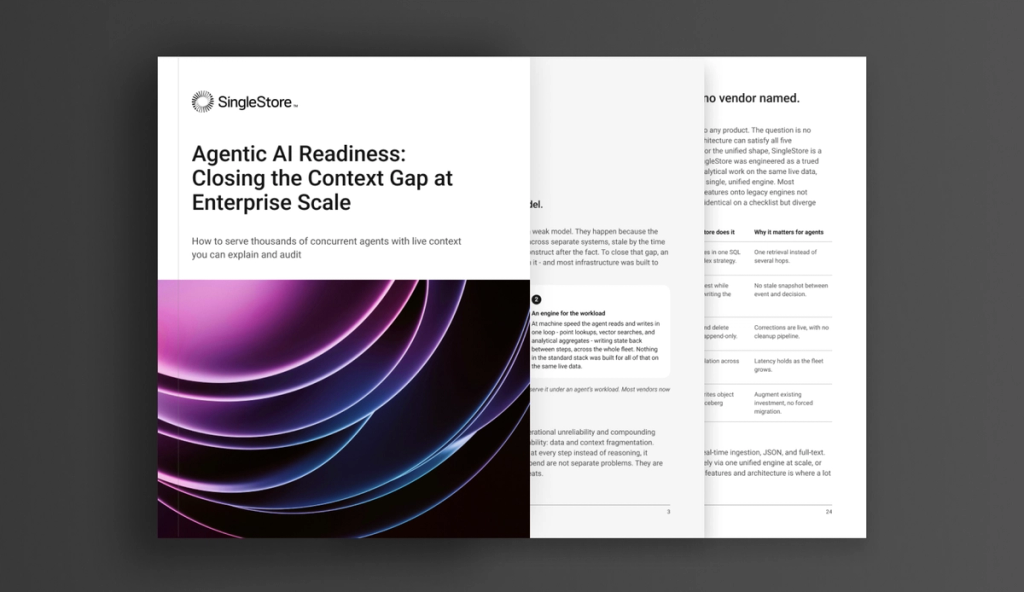
Most agentic AI projects clear the demo and stall in production. The usual diagnosis blames the model. The real failure sits one layer down, in the database that feeds the agent its context. When that context is scattered across five or six systems, stale by the time the agent acts, and impossible to reconstruct after the fact, even a flawless model makes the wrong call. Your token bill climbs while it does.
This guide treats reliability and cost as what they are: one architectural flaw seen from two seats. It works backward from how agents actually fail to the five things a data layer has to do to prevent it, and hands you a framework to diagnose your own stack before you evaluate a single vendor.
What's inside:
- The five tests of an agent-ready data layer, each written as something you can run against your own agents
- Why agentic workloads inflate token spend 5 to 30 times a standard chatbot, and where that money actually goes
- The three architectural shapes most teams are running, and what each costs in reliability and budget
- A scored context gap self-assessment for your most critical agent
- A 90-day roadmap that starts with a diagnosis, not a re-platform