If you are an engineer deciding where to spend the next few years of your career, the question is not simply whether a company is “doing AI.” Almost every company is now using that phrase. The more useful question is where in the stack the work happens, how much of the system you can actually affect, and whether the problems you solve will still matter after the current wave of demos, wrappers, and interface experiments has settled into production software.
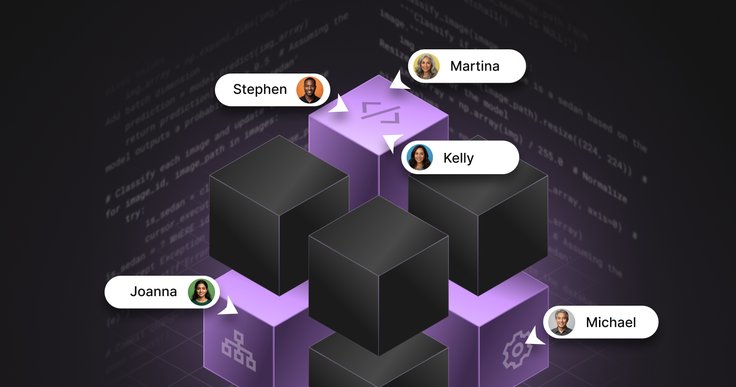
Most companies wrap a database. We build one.
SingleStore works near the bottom of that stack. We build a database. That sounds ordinary only because databases are so widely used that they have become invisible. But building one is not ordinary. Most companies consume databases, wrap databases, extend open source databases, or move data between databases.
Far fewer are still building the engine itself — the storage, execution, indexing, transaction, concurrency, distributed systems, and performance machinery that everything else depends on. When you work here, that machinery is yours. The work is close enough to the foundation to be technically interesting, and close enough to production that when something breaks, you know it immediately.
That distinction matters for engineers because the work changes you. When you build above a database, you learn how to use the abstraction well. When you build the database, you are responsible for the abstraction being true often enough, fast enough, and predictably enough that other engineers can safely forget how much machinery is underneath it.
The AI era is a data problem. We work on the data problem.
This is also why databases matter more, not less, as AI moves from demos into production. A model is only as useful as the data it can reach at the right moment. Fresh operational data, historical analytical data, vectors, metadata, permissions, transactions, search, retrieval, low-latency serving — all of it has to work together in systems customers can trust. The intelligence at the top of the stack is only as good as the infrastructure underneath it. That infrastructure is what we build.
At SingleStore, we work on one of those lower layers. The job is not to assemble another workflow around infrastructure. The job is to make the infrastructure more capable.
Your work ships. You'll know when it does.
At a very large company, an engineer can spend years on a famous product and still have a narrow relationship to it. You might work on a small service, a migration, an internal dashboard, or infrastructure whose only real customers are other internal teams. The scale is real. The brand is real. The actual work can drift a long way from anything a user ever touches.
SingleStore is not that. When you improve the optimizer, the change ships. When you fix a concurrency issue, production customers stop hitting it. The distance between the work and the consequence is short and that shortness is something most engineers underestimate until they've had it and lost it.
Join early enough and the problems grow with you.
You can develop taste in areas where the tradeoffs are real — and build the kind of expertise, and the kind of career, that is only possible when you own the whole system. Some of the engineers who joined us as interns are now senior engineers and principals. Some are running teams. That is not an accident of tenure. It is what happens when the problems keep getting harder and the company keeps growing into them.
We are growing, and we are hiring across engineering with more openings than we have had in years. If you know someone who belongs here, we have a referral program with payouts up to $5,000. You can find it at singlestore.com/refer.
Good pay, real equity, and work that actually matters.
The hardest part of recruiting for this kind of work is that the best reasons to do it are not always captured in a compensation comparison or a job description. There are companies that can pay more cash. There are companies with more liquid equity. There are jobs with more recognizable consumer products. We're not any of those things yet. But we pay well, we have equity with real upside, and the company is growing — your equity will mean something. The engineers who've stayed longest are here because the work is rare, the customers are real, and the distance between what you build and what ships to production is short.
We are also at an inflection point. SingleStore is entering a new chapter, being written now, by the people who choose to show up for it. If you have looked at this company before and wondered whether the timing was right, this is the moment we would point to. The engineers who join now will shape what this company becomes.
That is not for everyone. Some engineers prefer working closer to the user interface. Some want the fastest path to management. Some want a brand name on their resume that anyone would recognize. Those are reasonable choices.
But if you are the kind of engineer who wants to understand how systems really work, who would rather solve a difficult performance or correctness problem than add another screen to an internal tool, who wants ownership over infrastructure that customers actually run, then this is a rare place to spend part of your career.
Millions of engineers use databases. Very few ever get to build one.
We are hiring the ones who want to build.