A lead comes in while someone is still warm. They just clicked a pricing page, filled out a form, replied to an email, or hit an endpoint from an evaluation environment, and your systems have a narrow window to turn that spark into a conversation. For data platform architects supporting GTM workflows, this is where the platform either proves itself or loses the moment.
If you’ve watched this happen in production, you’ve probably seen the frustrating version. The event arrives fast, but the context from upstream data collection arrives late and is scattered across a stream processor, a warehouse, an operational store, and a handful of services that each hold “some” of the truth. By the time the lead record looks complete, the buyer has moved on and the urgency is gone.
Lead-response research has consistently pointed to the same reality: that early window matters disproportionately. The classic MIT/InsideSales lead response management study is a useful reference point for why minutes can matter more than hours when your goal is contact and qualification. In that study, responding within five minutes made revenue teams up to 100× more likely to make contact and over 20× more likely to qualify a lead compared with waiting just thirty minutes, while waiting an hour reduced contact odds by roughly an order of magnitude versus immediate follow-up. The broader “short life” framing is also captured in the original Harvard Business Review work by Oldroyd, McElheran, and Elkington: leads contacted within the first hour were about seven times more likely to be qualified than those contacted later, and more than 60 times more likely than those contacted after 24 hours.
So the design goal is practical: keep the data fresh, keep the context complete, ensure accurate data, and produce a decision fast enough to change the outcome.
What a real-time lead enrichment agent actually is
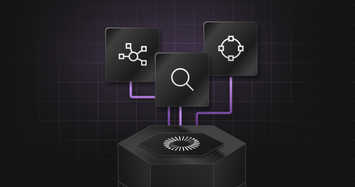
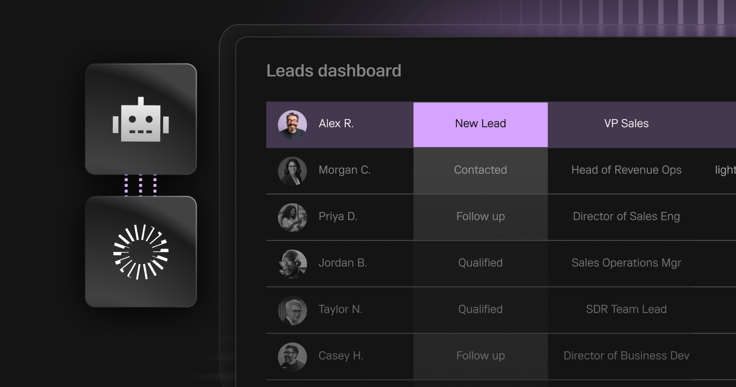
In the version of this workflow that holds up in production, a lead event lands in Kafka as streaming data, is ingested into SingleStore immediately as a durable fact, and triggers an enrichment loop that writes the results right back into the same system of record. Your UI doesn’t wait for a batch job, and it doesn’t depend on a downstream cache to “eventually” reflect reality. It queries SingleStore and gets the current truth: fit score, intent score, a recommended next action, and a rationale tied directly to the data that drove the recommendation.
That rationale is not a nice-to-have. It’s what makes the system trustworthy to the people who must act on it and debuggable to the people who must operate it.
If you’re curious how this is implemented under the hood, this GitHub project walks through a practical example of using AI agents to enrich leads, validate data, and trigger follow-up actions automatically.
Why the platform matters more than the scoring idea
Most lead enrichment efforts don’t fail because teams can’t come up with a scoring formula. They fail because the architecture can’t agree on what “now” means.
This workflow forces three requirements to exist simultaneously. You need low-latency ingest because the clock starts the moment a buyer raises their hand. You need low-latency joins and aggregation over fresh data because enrichment is inherently relational and context-driven. You need low-latency serving because the output isn’t for a report; it’s for a person or workflow that is about to act.
If those three pieces live in separate systems, you spend your time stitching state across inconsistent snapshots. That’s when you end up explaining missed moments with the same phrase everyone uses: the data was in the pipeline.
SingleStore changes the shape of the problem by acting as a real-time center of gravity where streaming ingest, fast relational queries, vector search, and serving can live under one consistent system of record. When you remove architectural seams, you can spend your effort improving the decision loop instead of negotiating consistency across systems.
Why GTM intelligence platforms care about “now”
It’s helpful to anchor this in the kinds of companies that live and die by these loops.
In a webinar, ZoomInfo has publicly shared outcomes tied to SingleStore, including 24x faster response times and a 75% reduction in total cost of ownership. 6sense has also described their journey of replacing multiple legacy engines with SingleStore to drive materially faster performance for interactive RevTech experiences. In another example, SingleStore has highlighted how AWS + SingleStore is being used by companies like 6sense and Cognism to build enterprise AI applications with an emphasis on immediacy and relevance of data.
Those stories converge on a single platform requirement. You don’t just need fast queries or a vector index. You need an operational loop that can ingest, contextualize, and serve decisions continuously, under production concurrency, without turning into an integration project.
The architecture, from the outside in
Kafka is a natural front door for this kind of system because it’s a durable event log built for continuous streams and replay. If you want the canonical framing, Kafka’s own documentation on the log is a good explanation of why “subscribe as of right now” and replayability are foundational concepts.
From Kafka, the goal is to land events into SingleStore fast enough that “freshness” survives end-to-end. SingleStore gives you multiple options here, including Pipelines that pull from Kafka and the SingleStore Kafka Sink Connector for Kafka Connect environments. The practical takeaway is that lead events can land as queryable facts without waiting for a batch window.
Inside SingleStore, the system stays simpler when you keep two representations of truth that work together. One is immutable: a raw events table that stores exactly what arrived and when it arrived, which supports replay and auditability. The other is current: a table representing the latest enriched view of each lead, which the UI and downstream actions can read instantly.
With those in place, the agent service sits next to the database rather than downstream from it. It reads the new lead, pulls context, enriches and scores, writes results back into SingleStore, and triggers action. The UI reads from that same system of record, so you don’t need to maintain a separate serving copy of the world just to make the experience feel fast.
Where vector search fits (beyond “RAG over documents”)
Vector similarity becomes practical in lead enrichment for reasons that have nothing to do with novelty. Keys are messy, names are inconsistent, and unstructured artifacts often contain the highest-value signals.
In this workflow, vector search is useful for lead-to-account matching and deduplication when structured identifiers are incomplete. It’s also useful for interpreting unstructured signals such as form-fill notes, email replies, or session summaries without forcing everything into brittle categorical fields. The operational advantage shows up when vector search lives in the same system as your structured context: you can combine similarity with recency, filters, joins, and business constraints without stitching results across inconsistent snapshots.
SingleStore supports storing and querying vector data directly, including guidance for high-volume vector loading and query patterns that live alongside your relational model.
Keeping the agent explainable, unlike magic
The part that separates a production system from a clever demo is what happens when someone asks “why?”. Why did we route it there? Why did we prioritize it? Why did we recommend that action?
A reliable pattern is to store not only the current scores and recommended action, but also the evidence and rationale that drove them. That can be as simple as saving the top signals and matched context that contributed to the decision, along with timestamps, confidence, and the model/version used. When you treat that as first-class data, you make the system measurable and debuggable, which is what drives adoption.
If you want to push more of this work closer to the data to reduce movement and latency, SingleStore’s AI Services include managed capabilities for running AI/ML tasks directly where the data lives. For example, AI & ML Functions are designed to run generative, embedding, and ML operations via SQL in a managed execution environment. For a higher-level view of how SingleStore frames AI workloads on a unified platform, SingleStore’s AI solution overview is a useful starting point.
From First Signal to First Action: Building the Loop
If the goal is to act while the moment still matters, sequencing is not incidental. It determines whether the system reacts in real time or spends its life catching up.
The first requirement is simple: new leads must land as durable, queryable facts the moment they occur. That means establishing the ingestion path from Kafka into an immutable raw events table in SingleStore using Pipelines or Kafka Connect, and validating that freshness survives end-to-end. Before scoring or automation can help, the system must reliably answer one question: what just happened?
Next comes current truth. GTM workflows do not operate on raw event streams; they operate on the latest known state of each lead. Maintaining a current-state lead table via deterministic upsert or merge logic gives applications and workflows a consistent place to read from, without reconstructing state in downstream services. When “current truth” is assembled outside the database, drift between systems becomes difficult to avoid.
Only then does enrichment belong in the loop. At that point, the agent can stay focused: detect new or updated leads, pull fresh context, compute intent scoring and next-best-action recommendations, write results back into SingleStore, and trigger action. Because ingest, state, and serving live in the same system of record, changes to scoring or models do not require re-coordinating multiple platforms.
That ordering is what keeps iteration fast and reliability high, even as decision logic becomes more sophisticated.
What changes when it’s working
When this loop is working, leads do not disappear into processing pipelines and reappear later as records with missing or outdated context. They arrive, are captured as durable facts, enriched immediately, and surface to sales while intent is still high and the conversation is still relevant.
That changes day-to-day behavior. Reps are no longer reacting to yesterday’s signals. Routing and prioritization reflect what just happened, not what finally finished processing. Automation becomes something teams trust, because it is acting on the same data they can see and validate themselves.
Just as importantly, decisions stop feeling opaque. When a lead is routed, prioritized, or flagged, the supporting evidence is available alongside the recommendation. That makes the system operable in production, not just impressive in demos, because teams can debug, tune, and improve it without guessing what the model saw.
Speed, context, and accountability together are what turn real-time lead enrichment from a technical feature into a system sales teams actually rely on.
If you are evaluating this architecture for your own GTM workflows, a practical starting point is to map where your lead signals originate, define what “current truth” must mean for your business, and design the enrichment loop so it can be measured and improved without introducing new system seams.
If you want to explore how organizations build similar operational decision loops on SingleStore, the Made on SingleStore collection provides concrete examples from production environments.