As data platforms evolve, expectations around real-time analytics have shifted alongside them. Lakehouse architectures have become a common foundation for unified storage and governance, but many organizations are finding that the real test comes not in consolidation, but in delivering consistent low-latency performance under production workloads.
The recently released The Data Lakehouses Landscape (Q1 2026, Forrester Research, Inc., February 3, 2026) report captures this direction clearly: “The lakehouse architecture enables continuous ingestion and analysis of streaming data, allowing organizations to act on information while it remains contextually relevant.”
That expectation has become central. Teams want streaming data to be immediately usable, not simply landed into storage. In practice, however, continuous ingestion alone does not guarantee real-time systems. Low-latency execution becomes difficult to sustain once high concurrency, transactional updates and operational analytics enter the picture. The problems engineers encounter include: brittle pipelines under load, multiple copies of the same data requiring reconciliation, and architectures built around batch processing that begin to show latency and consistency limits as workloads become more demanding.
What real-time AI workloads actually require
From our experience working with teams building at scale, four requirements consistently surface when engineers try to deliver real-time performance on a lakehouse foundation.
Predictable execution under streaming ingest and concurrency. Lakehouses are very good at landing large volumes of data into object storage, but real-time workloads introduce pressure from the other direction: interactive queries, operational dashboards and application-facing traffic running alongside continuous ingest. Continuous ingestion tends to produce a steady stream of small Parquet files in object storage, which increases metadata overhead and pushes more work into compaction and rewrite cycles. In that environment, latency becomes less about scanning speed and more about whether the engine can deliver predictable performance under concurrency without constant batch maintenance.
Consistency that holds up beyond offline analytics. Many lakehouse workloads begin with batch use cases, where eventual consistency and asynchronous updates are tolerable. Real-time AI systems are different. Feature stores, agentic workflows and operational decisioning require that queries reflect current system state, not something that will be reconciled later through compaction or delayed cleanup.
A simpler path from raw data to serving. In many deployments, the “unified platform” still ends up surrounded by fragile ingestion frameworks, multiple table copies and downstream serving layers built to compensate for latency. Each hop introduces operational overhead and new failure modes. Real-time architectures work best when the path from ingestion to query to application is direct.
Efficient updates and merges without constant rewrites. Object storage formats are optimized for append-heavy workloads, but real applications rarely stay append-only. Customer state changes, fraud signals evolve, embeddings refresh and features must update continuously. In data lakehouse systems, these patterns often translate into expensive merge operations and ongoing compaction work to keep file layouts performant. At AI scale, rewriting Parquet data just to support updates becomes one of the clearest limits of batch-oriented foundations.
A lakehouse engine designed for low-latency execution
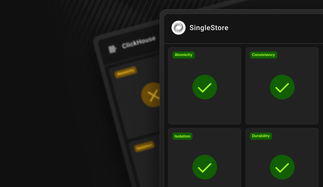
SingleStore’s architecture was designed with these requirements in mind. It spans transactional and analytical workloads in a unified execution engine capable of ingesting continuously, scaling across large clusters, and maintaining strong consistency without layers of intermediate pipelines that complicate traditional approaches.
This is particularly important as lakehouse systems take on AI-driven workloads, where freshness and serving performance matter as much as storage. Forrester’s The Data Lakehouses Landscape report emphasizes that reducing duplication is central to this shift: “By eliminating data movement and duplication, it ensures models are trained on the most current, complete datasets.”
When a system internalizes ingestion, execution, and serving within a cohesive runtime, the result is not just faster queries, but reduced operational complexity. Instead of managing isolated OLTP databases feeding into lakes, with separate sync tools and monitoring, teams can focus on building applications and models that rely on fresh, consistent data available immediately.
Real-time is now the lakehouse expectation
Lakehouses are becoming the standard infrastructure pattern, but the systems that deliver business outcomes are the ones that can execute in real time. Streaming ingest, interactive analytics and AI serving all push beyond what object-storage-first architectures were originally designed for. The takeaway is straightforward: treat the lakehouse as the foundation, but choose an execution engine that can ingest, query, and update continuously without turning operational workloads into a cycle of rewrites and delayed freshness. That is what makes real-time insight real in production.
Forrester does not endorse any company, product, brand, or service included in its research publications and does not advise any person to select the products or services of any company or brand based on the ratings included in such publications. Information is based on the best available resources. Opinions reflect judgment at the time and are subject to change. For more information, read about Forrester’s objectivity here.

.png?width=24&disable=upscale&auto=webp)