
Real-Time Intelligence for Energy + Utilities + Oil & Gas
SingleStore enables operators across energy, oil & gas, and utilities to process telemetry, asset data and operational workloads in a unified distributed database powering AI-driven optimization, predictive reliability, and resilient performance at scale.
Trusted by energy and utilities leaders


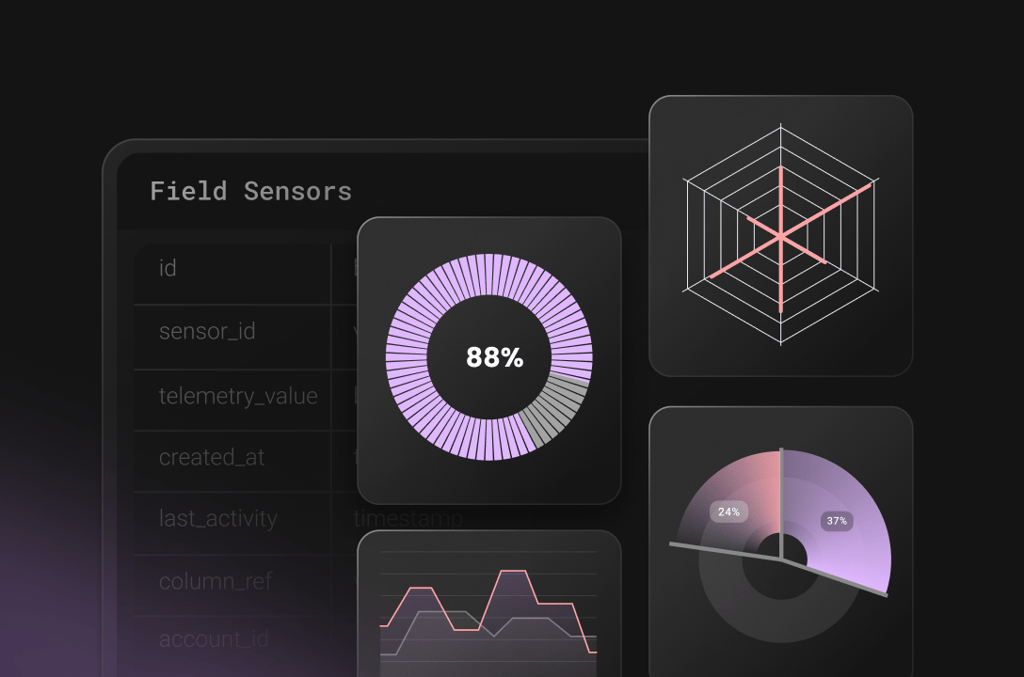
Energy producers, utilities, and oil & gas operators are instrumenting wells, pipelines, grids, and plants at massive scale. Smart meters, AMI, and field sensors now stream continuous telemetry instead of occasional readings, while renewables and distributed resources add more variability to flows and prices. In this environment, decisions must move from periodic review to live optimization - otherwise outages, safety events, and financial exposure compound faster than teams can respond.
From predictive maintenance to load balancing and trading optimization, AI is no longer experimental. Models now influence dispatch, pricing, asset health, and safety decisions. That shift increases the need for accurate, live operational context - because model latency directly affects reliability, margin, and compliance.
Grid stability mandates, ESG reporting, safety regulations, and cyber resilience requirements demand auditable, always-available data. Operators must maintain transparent, real-time visibility across distributed infrastructure. Fragmented data estates and delayed reporting create blind spots that raise regulatory, ESG, and market risk as expectations and scrutiny continue to tighten.
Telemetry overload creates operational lag
High-frequency sensor streams overwhelm legacy systems designed for batch processing. Data is buffered, summarized, or moved across pipelines before analysis - delaying anomaly detection, maintenance response, and grid balancing decisions.
What’s needed:
A distributed database built for high-ingest streaming telemetry and unified operational and analytical workloads.
Separate systems fracture operational truth
SCADA data, market feeds, maintenance logs, and financial metrics often live in different platforms. Each integration introduces latency and inconsistency, complicating cross-domain visibility for trading desks, grid operators, and reliability teams.
What’s needed:
A unified data engine that supports complex, cross-domain queries on live data without copying or synchronizing between systems so teams share one version of the truth.
Concurrency strains mission-critical workloads
Control rooms, trading desks, AI models, dashboards, and regulatory queries compete for the same data. Under load, legacy systems degrade - forcing tradeoffs between operational performance and analytical access.
What’s needed:
A distributed database built for high-concurrency querying that maintains consistent response times across operational, analytical, and AI workloads, even during peak demand.
AI initiatives stall in production
Predictive models often rely on delayed feature pipelines or isolated environments, limiting real-time action. Without direct access to live, governed operational data, AI remains advisory rather than operational.
What’s needed:
An AI‑ready data foundation that gives models direct, governed access to live operational data with strong consistency and auditability.
Historical scale limits predictive insight
Years of operational telemetry, inspection records, and market data are required for forecasting and compliance. Traditional architectures archive cold data separately, making unified analysis across time expensive or slow.
What’s needed:
A database that delivers cost-efficient scale while keeping current and historical time‑series and market data queryable in one system.
Unified operational + analytical engine
SingleStore runs transactions, analytics, and AI workloads on the same data simultaneously - eliminating pipeline latency and enabling instant insight across operational and historical datasets.
Real-time ingest with immediate queryability
Operational telemetry, market feeds, and application events become queryable in milliseconds, enabling rapid anomaly detection, optimization, and automated response.
Consistent performance under extreme concurrency
Thousands of dashboards, operators, and AI processes can access the same live data without performance degradation - ensuring reliability during peak demand or grid events.
AI-ready data foundation
Structured, semi-structured, time-series, and vector data coexist in one platform, enabling predictive maintenance, grid optimization, and AI-driven operational agents without additional systems.
ACID correctness at distributed scale
Mission-critical updates - such as asset states, trading positions, or operational logs - maintain full transactional integrity across distributed infrastructure.
Predictive asset reliability
Unplanned downtime for geographically distributed energy and utility assets is expensive and risky. Instead of traditional monitoring that only flags issues after a set limit is reached, unifying real-time telemetry analysis with historical data allows teams to anticipate failures sooner. This approach leads to fewer outages, optimized maintenance, and ultimately, higher uptime, reduced maintenance costs, and safer operations. These improvements, even incremental, generate significant returns, especially across large-scale operations.
Grid & load optimization
Utilities balance fluctuating demand, distributed generation, and regulatory constraints. Batch analytics cannot adapt fast enough during peak events. Real-time ingest and analytics allow operators to monitor load conditions continuously and rebalance resources dynamically to improve resilience and efficiency. This improves grid resilience, uses renewables more effectively, and cuts imbalance and curtailment costs.
Pipeline & field monitoring
Oil & gas infrastructure generates constant pressure, flow, and environmental telemetry. Delayed detection increases environmental and financial risk. Continuous ingestion and live anomaly detection enable faster intervention, improved safety, and stronger compliance posture.
Energy trading & risk visibility
Energy markets shift rapidly based on supply, weather, and geopolitical factors. Traders require live operational and market data to manage positions effectively. A unified data platform enables intraday P&L, exposure tracking, and risk assessment without waiting for batch reconciliation.
ESG & regulatory reporting
Regulators demand accurate emissions tracking, operational transparency, and incident reporting. When operational and historical data are unified, reporting becomes both faster and more auditable, reducing compliance risk and manual reconciliation. Unified, time‑stamped data turns ESG and regulatory reporting from manual, after‑the‑fact work into near‑real‑time, auditable views of emissions, incidents, and operations.
Faster operational decisions
Move from periodic monitoring to continuous intelligence. Operational teams detect, diagnose, and respond in milliseconds - reducing downtime, improving reliability, and protecting revenue.
Resilient infrastructure
Maintain performance during peak grid events, market volatility, or crisis scenarios. High concurrency and distributed scalability support mission-critical continuity.
Trusted, auditable data
Ensure compliance with regulatory, safety, and ESG mandates through consistent, governed access to unified operational data.
Reduced architectural complexity
Consolidate multiple operational, analytical, and AI systems into a single data foundation - lowering infrastructure overhead and simplifying governance.
AI-driven optimization
Enable predictive maintenance, automated dispatch, intelligent trading, and real-time optimization models grounded in live operational truth.

Power Real-Time Intelligence Across Your Infrastructure
See how unified, real-time data can transform reliability, optimization, and AI performance across energy + utility + oil&gas operations.