
The database for SaaS and software companies.
SingleStore runs transactions, analytics, search and AI in one engine. SaaS teams use it to keep every tenant fast, ship analytics and AI features inside their product, and hold infrastructure costs in line as they add customers.
Running in production at SaaS and software companies




Customers expect analytics inside the product
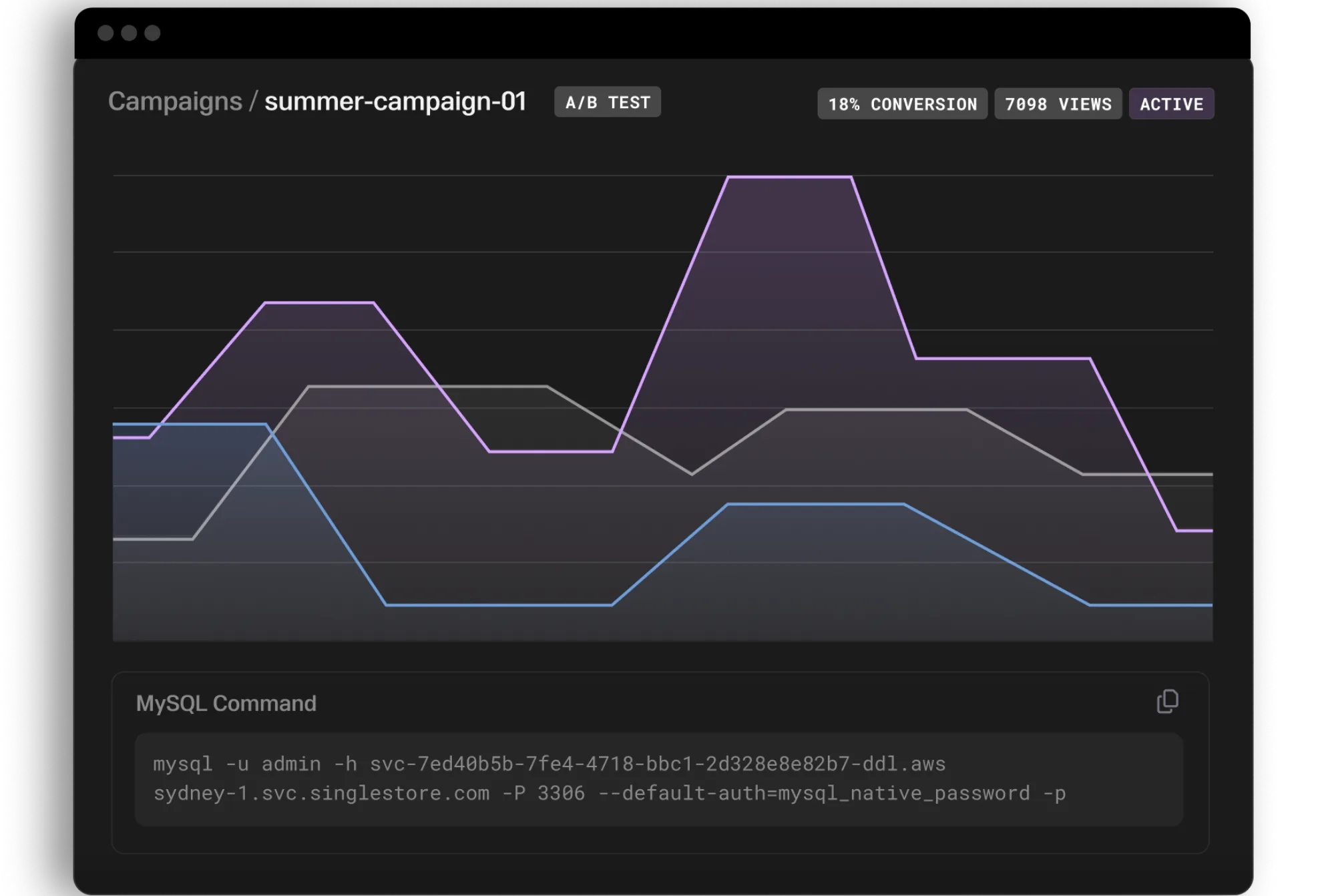
Dashboards, usage reports and alerts are part of what customers pay for now, not an export. They run against every tenant’s live data, all day, and they are judged on speed.
Growth multiplies tenants, users and queries
Each new customer adds data and concurrent users to the same system. A design that served 50 tenants slows down at 5,000, usually during a customer’s busiest hour.
AI features need each tenant’s current data
Search, copilots and agents inside the product have to read a customer’s latest records, and only that customer’s, under the same permissions as the application.A database for every job, and a pipeline between each
Postgres or MySQL for the application, a search engine for search, a cache for speed and a warehouse for reports. Every copy adds lag, cost and one more system to keep in sync.
Noisy neighbors and slow tenants
One large customer’s report slows everyone on the shared cluster. Splitting tenants across many databases fixes that and multiplies the operations work instead.
In-product analytics that time out
Customer dashboards either run heavy aggregations on the transactional database, which slows the app, or read from a warehouse that loads hourly, which shows old numbers.
Infrastructure cost that grows faster than revenue
Every new system and replica adds to cost of goods sold. Gross margin shrinks just as investors and the board start to watch it.
Transactions and analytics in one engine
Serve the application and run real-time analytics on the same tables, so in-product reports never wait on an ETL job.
Built for multi-tenant workloads
Isolate tenants by database, schema or row, and use resource pools so one customer’s heavy report does not slow the rest.
Millisecond queries at high concurrency
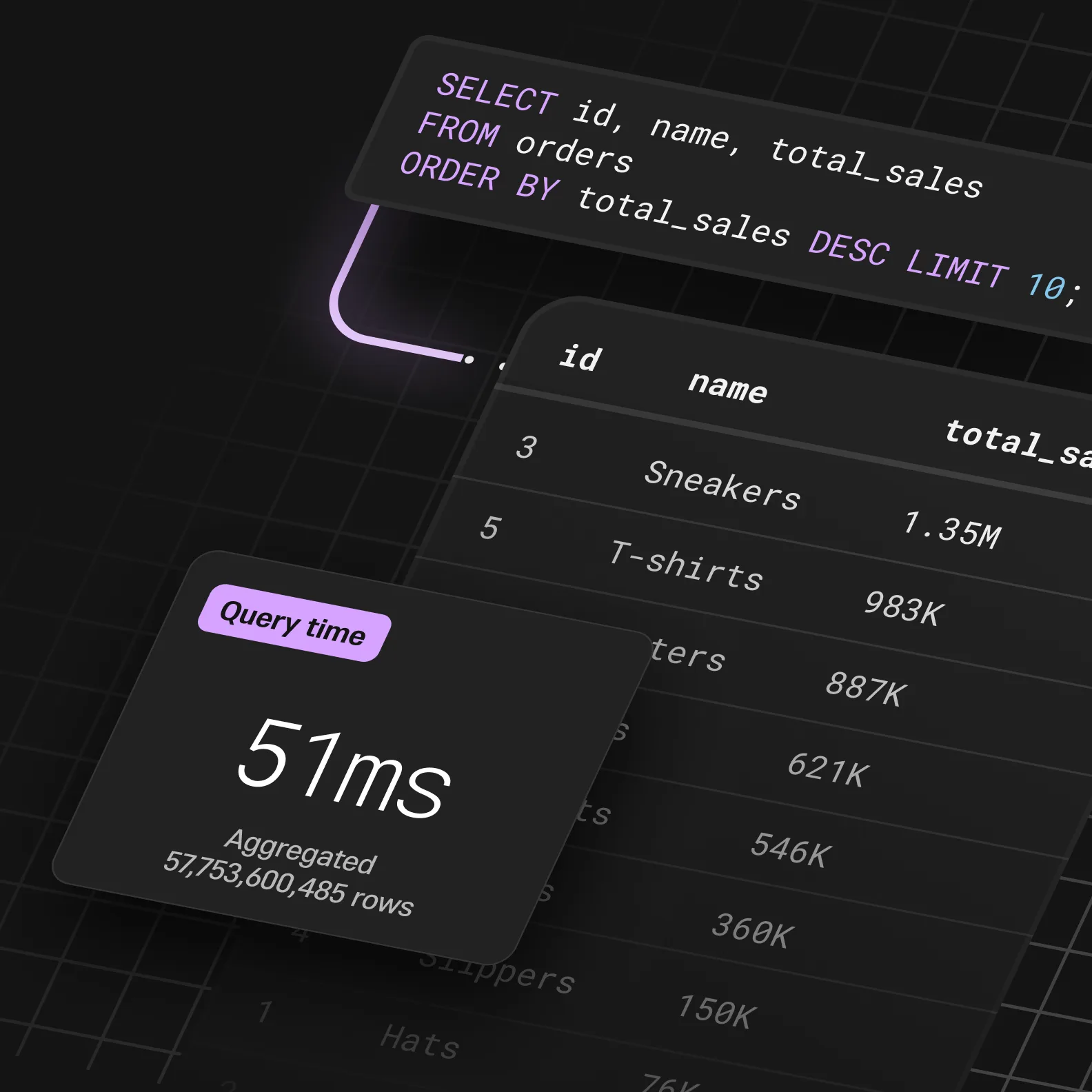
Response times stay in milliseconds while thousands of your customers’ users load dashboards at once.
Search and vectors built in
Run full-text search and vector search on the same tables as the application, with no separate search engine to sync.
MySQL-compatible SQL
Connect over the MySQL wire protocol with the drivers, ORMs and tools you already use. See the migration guides.
Managed or self-managed, and secure
Run SingleStore Helios® on AWS, Azure or Google Cloud, or self-managed, with SOC 2 Type II and ISO 27001 certification.
Give every customer fast, interactive reports on their own live data, without a separate analytics stack. More on customer-facing analytics.
Meter usage events as they happen and show customers their consumption and spend in real time, from the same tables that bill them.
Let users find records, documents and messages with keyword and semantic search that respects tenant boundaries and permissions.
Ground copilots and agents in each customer’s current records, with vector search and SQL in one query. SingleStore for AI and agents.
Let users drill from a forecast to a deal to a single call or event on fresh data, the pattern Outreach uses for its sales platform.
Store every user and API event and let customers query their own audit trail. Security vendors run detection on SingleStore at event-stream volume; see cybersecurity.
Move application data, search, caching and reporting onto one database to cut systems, sync jobs and cost. How SingleStore compares with PostgreSQL.
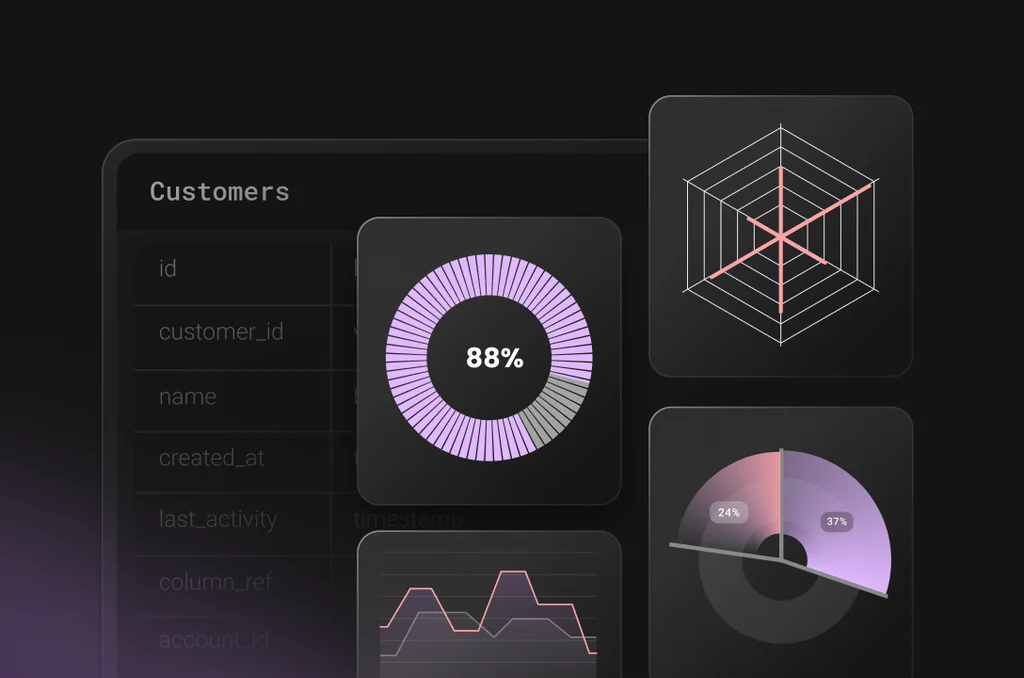
Customer-facing analytics for Workfront at enterprise scale
Adobe Workfront runs marketing operations for thousands of global enterprises, and its customers build their own reports. As data grew, the old reporting system became slow and expensive. On SingleStore, those customer-defined reports return in seconds instead of minutes, at lower cost.
Results
300x faster reports, from minutes to seconds
10+ billion rows joined in complex queries
70 TB+ across 250 tables
Under 1 second on average from ingest to query
Threat detection on 100 billion events a day
Armis tracks every connected device in its customers’ environments and looks for threats as they emerge. Queries that used to time out on its previous search engine now finish in seconds on SingleStore, and its data pipeline costs far less to run.
Results
100 billion events a day
70% lower data pipeline cost
Under 10 seconds for queries that used to time out
A database for SaaS has to serve the application and its analytics for many tenants at once, stay fast as concurrency grows, support search and AI features, and keep cost per customer down as you scale. SingleStore does this in one engine, so you run fewer systems and fewer pipelines. More on customer-facing analytics.
Teams use a database per tenant, a schema per tenant or shared tables with a tenant key, depending on isolation needs and tenant count. Resource pools cap what any one workload can use, so a large customer’s report does not slow everyone else.
Yes. SingleStore speaks the MySQL wire protocol, so most MySQL drivers, ORMs and tools connect unchanged, and there are guides for moving from Postgres. See migrating to SingleStore.
SingleStore Helios® is billed for the compute you run, and you can start on a free tier and scale as you add customers. See pricing for plans and rates.
SingleStore Helios® holds SOC 2 Type II and ISO 27001 certifications and includes role-based access control, encryption in transit and at rest, and audit logging, which helps answer customers’ security reviews.

Talk to an engineer about your SaaS stack.
Bring one workload, such as in-product analytics or search, and a SingleStore engineer will walk you through the architecture and a proof of concept on your data.