.png?width=24&disable=upscale&auto=webp)
If your Revenue Operations platform is running on batch data pipelines, you're not selling a forecasting tool; you're selling a history book. Here's what it takes to build the real-time foundation your customers actually need.
The Real Problem Inside Every RevOps Platform
Revenue Operations (RevOps) platforms have never had more data to work with. CRM activity, product usage telemetry, conversation intelligence, intent signals, email engagement - it all flows in. The promise to customers is clear: consolidate your revenue signals, and you unlock predictable revenue growth.
Teams across sales, marketing, and customer success invest heavily in mapping every stage of the customer journey, and yet the data that should make those investments pay off keeps arriving too late to act on. Most RevOps platforms are built on database architectures designed for reporting, not for real-time decision-making. Signals get ingested in batches. Dashboards refresh on schedules. Scoring models run nightly. By the time a rep sees that a key stakeholder watched the pricing video at 11:42 p.m. and forwarded it to finance, the moment to act has already passed.
The gap between when a signal occurs and when a user can act on it isn't a UX problem, it's an architectural one. And it's costing your customers deals.
This is the core challenge for any team building a modern Revenue Operations platform. The discipline of revenue operations practitioners work within only delivers its full value when the underlying data is as current as the decisions it's meant to support. The data layer you chose when building the platform may be quietly capping the value you can deliver.
Decision Latency: The Metric Your Customers Can't Name But Definitely Feel
When Revenue Operations leaders say they don't trust their forecasting tools, they're rarely complaining about features. They're describing the anxiety linked to making a multi-million dollar call on data that might be a day old. For SaaS businesses built on recurring revenue, where the health of operations revenue depends on retention as much as new bookings, this lag is especially damaging: it means churn signals and expansion signals arrive too late to act on.
Gartner research has found that fewer than half of sales leaders report high confidence in their forecast accuracy. A Forrester study commissioned by Clari found that more than half of respondents miss their quarterly forecast by over 10%. These aren't small margins. A 10% miss on a $50M forecast is a $5M planning error that ripples into hiring, budget, and board-level credibility.
The underlying cause, in most cases, is decision latency: the delay between the system's records and the business's actual current state. Decision latency is measured in hours or days on most platforms. In a competitive deal cycle (or when a customer success team is trying to catch a churn risk before it becomes a lost renewal) real time access to signals isn't a nice-to-have. It's the difference between having the opportunity to intervene versus writing a post-mortem.
What decision latency looks like in practice:
A lead scoring model runs overnight, so a rep's queue is prioritized on data that's up to 24 hours stale, and sales ops teams spend the morning manually correcting the queue before the day's calls begin
Engagement signals (e.g. email opens, doc views, product usage spikes) accumulate in a pipeline but aren't queryable until the next ETL cycle
Forecast roll-ups require RevOps teams to manually reconcile three different dashboard views because none of them agree on the latest number
Customer success teams don't see a drop in product usage during a trial until the weekly report, by which time the prospect has gone quiet
Your customers feel this friction every day. They compensate with extra meetings, shadow spreadsheets, and Slack threads trying to reconstruct ground truth in real time. Every workaround is a signal that the platform hasn't fully solved the problem.
The Revenue Operations Loop, and Where Platforms Break It
Every Revenue Operations platform is, at its core, trying to accelerate and de-risk the same loop. Whether the team calls it sales operations, RevOps, or simply pipeline management, the mechanics are the same:
Prioritization: which accounts and opportunities deserve attention right now?
Routing: who should act, and how fast does that handoff need to happen?
Engagement visibility: what is buyer behaviour actually telling us about deal health?
Forecasting: what is the business genuinely likely to close this quarter?
When the underlying data is fresh and fast, each step reinforces the next. Accurate prioritization feeds clean routing. Clean routing drives timely engagement. Timely engagement produces honest forecasts. The loop compounds.
When data is stale, the loop fragments, and revenue generating activity suffers at every stage. Scoring gets ignored because reps know it's behind. Routing rules break under end-of-quarter surge. Deal stages become optimistic fiction rather than reflections of buyer behaviour. Forecast calls turn into interrogations where managers reconstruct deals from scratch because they don't trust the system.
A Revenue Operations platform with high data latency doesn't just underperform, it actively erodes user trust. And once trust is gone, adoption follows. Reps stop updating CRM fields because the system doesn't reflect their reality. The data gets worse. The loop accelerates in the wrong direction.
What a Real-Time Revenue Operations Platform Actually Looks Like
The good news is that the architectural pattern for solving this is well understood. The challenge is execution at the database layer.
A Revenue Operations platform with genuine real-time capability looks different at every layer of the product. The payoff is felt across every team it serves, from sales and marketing alignment to customer success visibility, because everyone is finally working from the same current picture.
Continuous ingestion, not scheduled batches
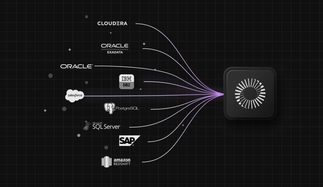
Signals from CRM, email, calendar, product analytics, conversation intelligence, and intent data providers need to land in a queryable store within seconds of occurring, not hours. This is the foundation of real time revenue analytics. It requires a data pipeline architecture built around streaming ingestion rather than periodic ETL jobs.
Low-latency queries under concurrent load
RevOps teams open dashboards simultaneously (e.g. Monday morning pipeline reviews, end-of-quarter forecast calls) often at exactly the same moment. The data layer needs to serve analytical queries with sub-second latency even when dozens or hundreds of users are hitting it at once, without degrading the real-time ingestion pipeline.
A single queryable store for transactions and analytics
Many platforms today split their architecture into an operational database for writes and a separate data warehouse for reads. This separation introduces added latency that creates decision lag. Collapsing both into a single database (one that handles high-throughput writes and complex analytical queries simultaneously) removes the fundamental source of staleness.
AI features that run on current data
AI-powered scoring, deal recommendations, and natural language querying are increasingly table stakes for Revenue Operations platforms. Customer success teams use these features to flag churn risk before it surfaces in a renewal call, and customer success teams tracking product adoption can catch a revenue generating expansion signal before the customer even asks. Sales reps use AI to identify the next revenue generating action in a stalled deal. But an AI feature is only as good as the data it runs on: if your vector store and your transactional CRM data are on different refresh cycles, your AI recommendations will consistently lag behind reality.
The Compounding Payoff: Trust, Adoption, and Retention
There's an organisational dynamic that sits underneath all of this that rarely gets discussed in data architecture conversations: trust.
When revenue teams trust that the number on the screen reflects what actually happened this morning (not yesterday or three days ago) behavior changes. Customer success managers coach renewal conversations with real evidence instead of gut feel. RevOps leads spend Monday optimizing the engine instead of reconciling reports. Forecast calls become forward-looking planning sessions instead of backward-looking interrogations.
For platform builders, this trust is the product. It's what drives adoption, retention, and expansion. A Revenue Operations platform that earns the reputation of being reliably current becomes the system of record. One that doesn't gets worked around, and usually lands on the hotlist of systems to replace.
This is why data latency is ultimately a product problem. Every hour of lag is a small daily tax on the trust your customers place in your platform. Over time, that tax compounds.
The Revenue Operations platforms that will win the next five years won't be differentiated by the number of integrations or the sophistication of their AI models alone. They'll be differentiated by how fast and reliably those models reflect the current state of the business.
What to Look for in Your Data Layer
If you're building or scaling a Revenue Operations platform and evaluating whether your current data layer can support genuine real-time capabilities, the questions below apply whether you're primarily serving RevOps teams, sales and marketing orgs, or the full go-to-market function:
Can you ingest millions of rows of CRM and engagement data per second and have them immediately available for queries,without a separate batch process? Sales ops teams shouldn't be the quality-control layer on your pipelines.
Can your analytical database queries return results in under a second when 100, 500, or more users are hitting the system simultaneously?
Do you maintain one version of truth across your transactional and analytical workloads, or are you managing synchronization between separate systems?
Can your AI features (scoring models, semantic search, deal recommendations) run against data that's seconds old? This matters most for customer success and renewal workflows, where a 24-hour lag on a churn signal can be the difference between saving an account and losing it.
When a buyer signal occurs (a document forwarded, a pricing page revisited, a product usage drop), how long until a rep or manager can act on it?
If the honest answer to any of these involves "batch process," "scheduled refresh," or "we reconcile overnight," your platform has a decision latency problem, and so do your customers.
Why build on SingleStore
At SingleStore, we built our real-time analytical database platform specifically for workloads like these: high-throughput ingestion combined with sub-second analytical queries, at scale, under concurrent load. It's a single store that handles the operational and analytical sides of the problem simultaneously. No ETL between them, no refresh cycle lag. The best performing revenue operations platforms use it to close the gap between signal and action.
This means you can build the scoring, routing, engagement visibility, and forecasting features your customers need without architecting around a fundamental latency constraint.
If you're evaluating your data layer for real-time capabilities, the SingleStore overview of real-time analytics is a practical starting point. For teams dealing with continuous ingestion at scale, SingleStore Pipelines covers the architecture for ingesting millions of rows per second while keeping data immediately queryable. And for platforms blending structured deal data with AI-powered features, the SingleStore AI capabilities show how vectors, signals, and transactions can coexist in a single low-latency store.
The revenue loop your customers are trying to run is already fast. The question is whether your platform's data layer is fast enough to keep up.